In the rapidly evolving landscape of NHS healthcare, implementing a robust "digital front door" is no longer just an upgrade - it is a core necessity for survival. To meet current NHS Modern General Practice Access guidelines, practices must seamlessly manage patient demand, optimise administrative workflows, and streamline clinical triage.Whether you are coordinating care in primary care, secondary care, community health, or pharmacy services, selecting the right digital platform directly impacts your staff's retention and your patients' wellbeing. Below is an evaluation of five market-leading digital solution providers operating across the NHS network today.
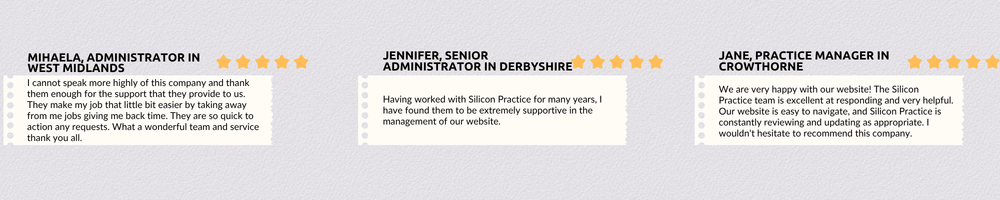
1. Silicon Practice (FootFall)
Best for: Practices and Primary Care Networks (PCNs) seeking a seamless, dual-purpose platform that acts as both a public facing web entry point and a heavy duty backend OCVC (Online Consultation & Video Consultation) workspace.
About Silicon Practice: Proven in over 1,000 UK GP practices, Silicon Practice doesn't just manage your external web presence; it delivers a complete end to end clinical triage ecosystem. The patient journey begins at Foundation - an accessible, NHS themed web front door. Once a request is submitted, the platform shifts entirely into its backend OCVC engine via the Advanced Dashboard and floating FootFall Connect Toolbar (which deeply integrates with EMIS Web and SystmOne). This central administrative hub processes online consultations, automates PDS verification, tracks real-time clinician capacity for equitable task assigning, and hosts app-free video consultations - driving a proven 30% reduction in inbound telephone queues.
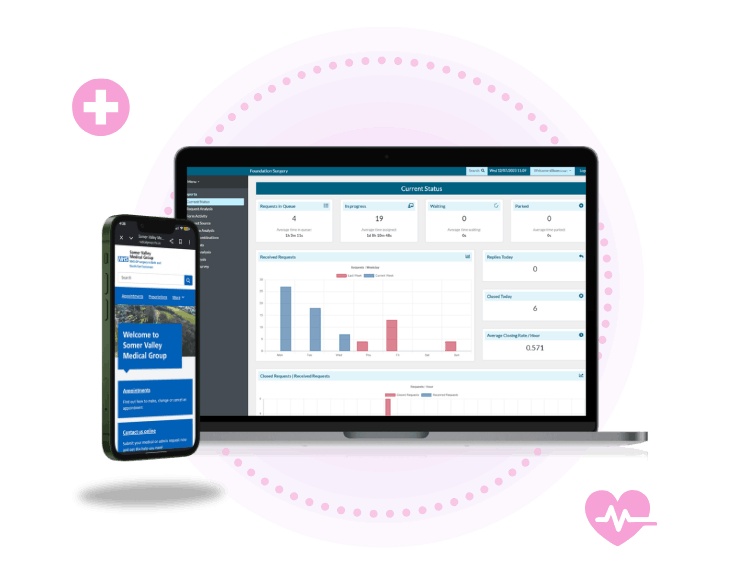
Key Features:
- Advanced OCVC & smart demand management: features an intelligent collection of over 50 customisable form types (including 21 pre-coded health reviews with built in SNOMED-CT coding). To protect safe clinical capacity, staff utilise advanced Patient Form Control to temporarily deactivate online forms or dynamically navigate patients to alternative care pathways during peak busy periods or practice closures
- Patient Digital Assistant & Referral Flow: leverages an “always on” smart conversational chatbot that sits on your website to provide 24/7 signposting to services, forms and NHS appointments without needing to call the surgery. When a request is logged, Referral Flow automatically flags patient eligibility for the NHS Pharmacy First scheme within the dashboard, offering handy proxy forms for the reception team to quickly action telephone-in requests
- Online appointment booking: empowers administrative teams to drastically reduce phone queues by generating fully configurable self-booking links – customised by slot type, designated clinician, or specific appointment rules – shared via SMS, email, or embedded directly into the website. All booked appointments feature real-time integration to automatically write back into EMIS and TPP SystmOne to eliminate double bookings
- Batch messaging & multi-channel tracking: built to reach large, selected patient groups at scale in just a few clicks to push service updates, seasonal health advice, or chronic disease management reviews. The system utilises secure two-way communication tracking (SMS and email) with customisable automatic patient acknowledgements, full attachment handling, and real-time visibility over when staff responses have been read
2026 Key Takeaway: FootFall functions as an powerful, bidirectional OCVC infrastructure that includes a suite of zero-cost enhancements like Referral Flow and the Patient Digital Assistant. By perfectly connecting an accessible frontend patient journey to an automated, data-driven backend command center, it gives surgeries total control over their digital threshold while significantly freeing up GP appointments.
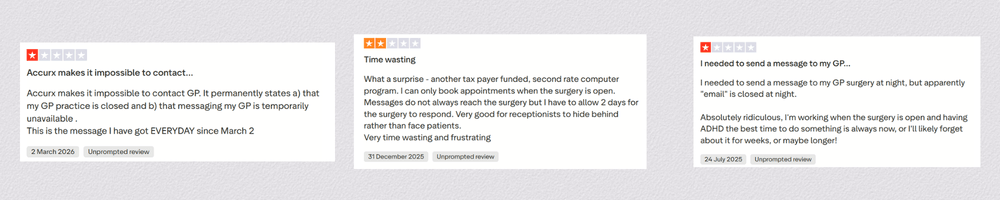
2. Accurx
Best for: Rapid, multi-channel clinical communication, total triage management, and AI documentation tools within general practice and wider NHS trusts.
About Accurx: Utilised by a large percentage of UK GP practices and the majority of NHS Trusts, Accurx is the main supplier for healthcare communication. It reduces legacy friction points like letters and pagers, focusing instead on rapid, direct digital connection.
Key Features:
- Accurx Scribe: an AI medical scribe that securely captures audio from live patient consultations and immediately drafts structured, formatted medical notes with suggested clinical codes
- Accurx Bell: an integrated AI phone assistant that handles routine inbound calls, accurately capturing patient requests and funneling them directly into a single triage inbox
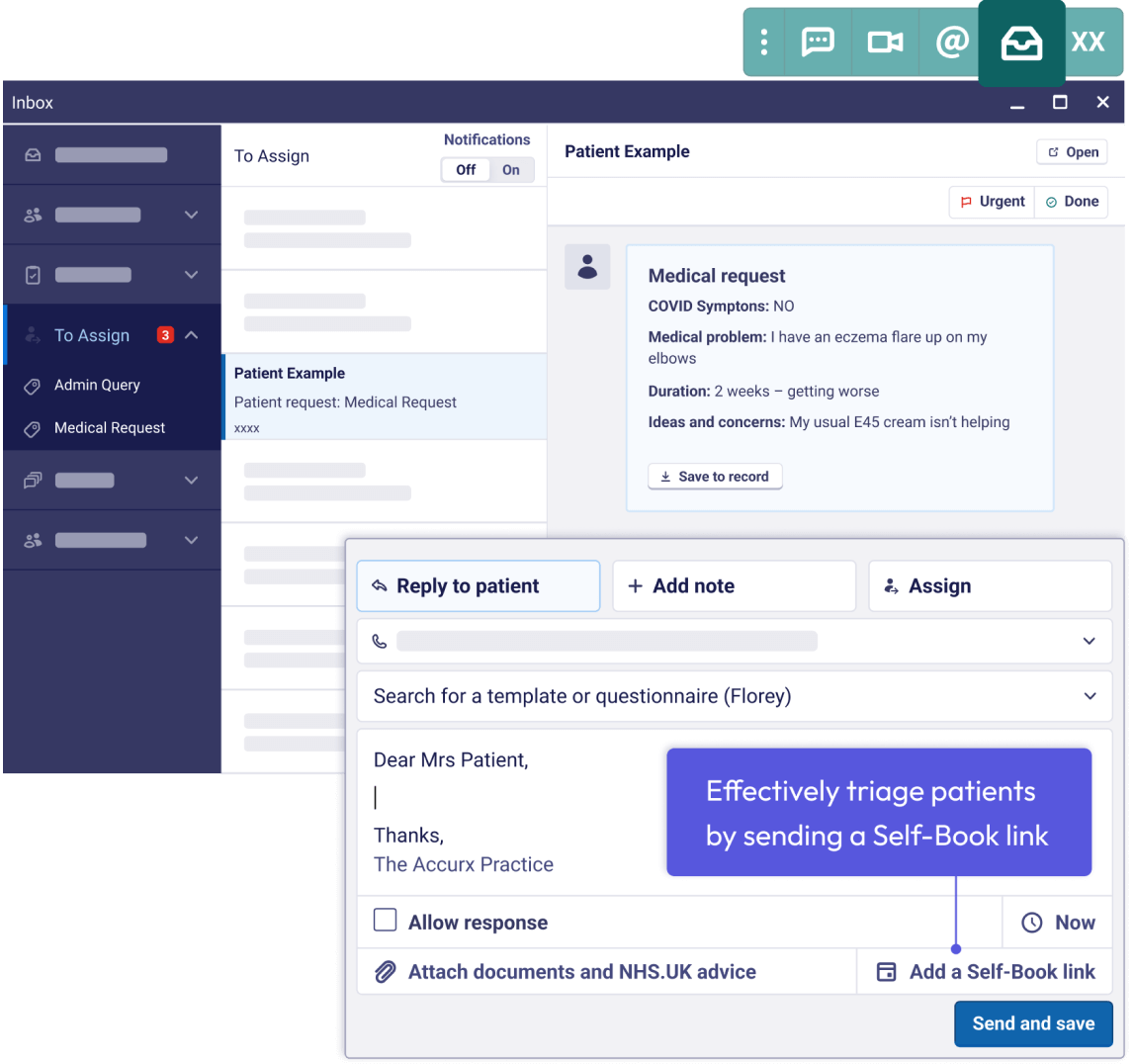
- Total triage flow & self-book: a centralised system allowing receptionists to log telephone requests via “Reception Flow”, coupled with automatic patient self-booking text links
2026 Key Takeaway: Accurx remains an hefty toolkit for modern care execution. The addition of deep AI capabilities like automated scribing and conversational call handling makes it a time saver for burdened clinical teams.
3. Patchs Health
Best for: AI-driven automated triage, case allocation and practices aiming to offer highly asynchronous communication options.
About Patchs Health: Designed in collaboration with GPs, patients, and the University of Manchester, Patchs is an UKCA-marked Class I Medical Device. It prioritises intelligent automation to flag high acuity cases early and improve overall patient safety.
Key Features:
- Inflexible AI chatbot: unlike rigid multiple choice forms, Patchs uses an open ended conversational chatbot to gather an organic history from patients
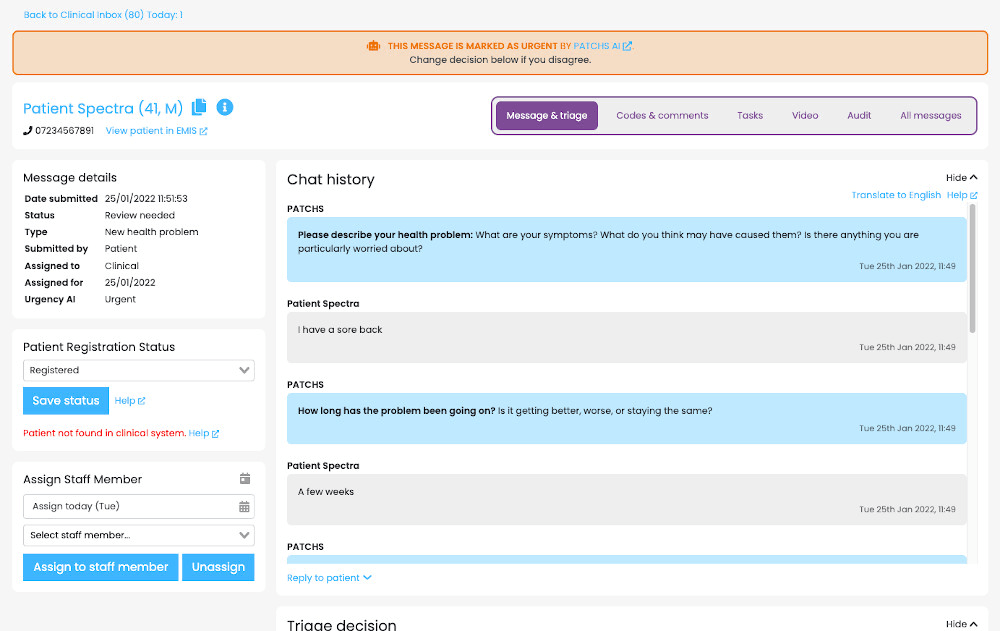
- AI suite: Automatically categorises incoming requests via Topic AI, tags emergency risks via Urgency AI, determines if an in-person visit is needed via Face-to-Face AI, and routes the task via Assign AI
- Patchs telephone assistant: a telephone integration allowing digitally excluded or vulnerable patients to call and have their request converted smoothly into a digital triage ticket
2026 Key Takeaway: Patchs is tailored for large practices and Primary Care Networks (PCNs) that require automated demand management to reduce administrative burnout while protecting clinical safety boundaries.
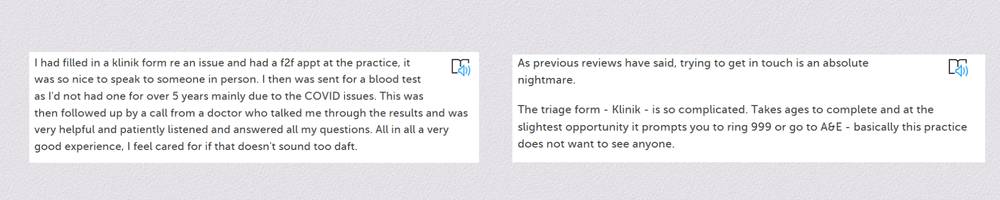
4. Klinik Healthcare Solutions
Best for: Clinically validated, algorithm-driven primary care triage and operational business intelligence.
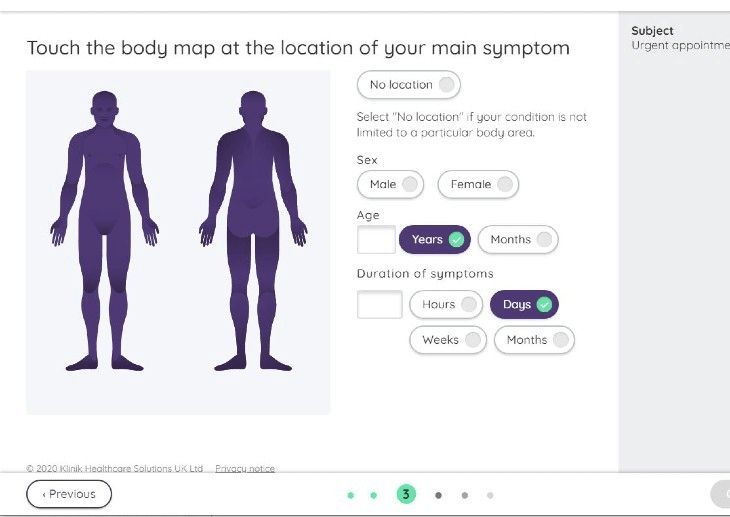
About Klinik Healthcare Solutions: Originally originating in Finland and now serving millions of patients across Europe and the UK, Klinik uses a strict, medically supervised algorithm to recognise over 1,000 distinct symptoms. It focuses heavily on equitable access, treating online, phone, and walk-in requests with equal clinical logic.
Key Features:
- Medically validated AI triage: Klinik Access analyses patient enquiries by type and immediate clinical urgency, providing care-pathway recommendations to the practice triage team
- Non-GP workforce mapping: custom pathways can be designed to map directly to a local PCN resources, immediately guiding appropriate patients straight to clinical pharmacists, physiotherapists, or advanced nurse practitioners
- BI Dashboard: delivers real-time analytics to give practice managers complete operational clarity on shifting daily demand patterns
2026 Key Takeaway: Klinik works well at safely offloading work from GPs onto the wider multidisciplinary team, with independent health economic evaluations
5. Anima
Best for: Practices looking for a rapid, unified platform for online consultations, automated document processing and collaborative triage workflows.
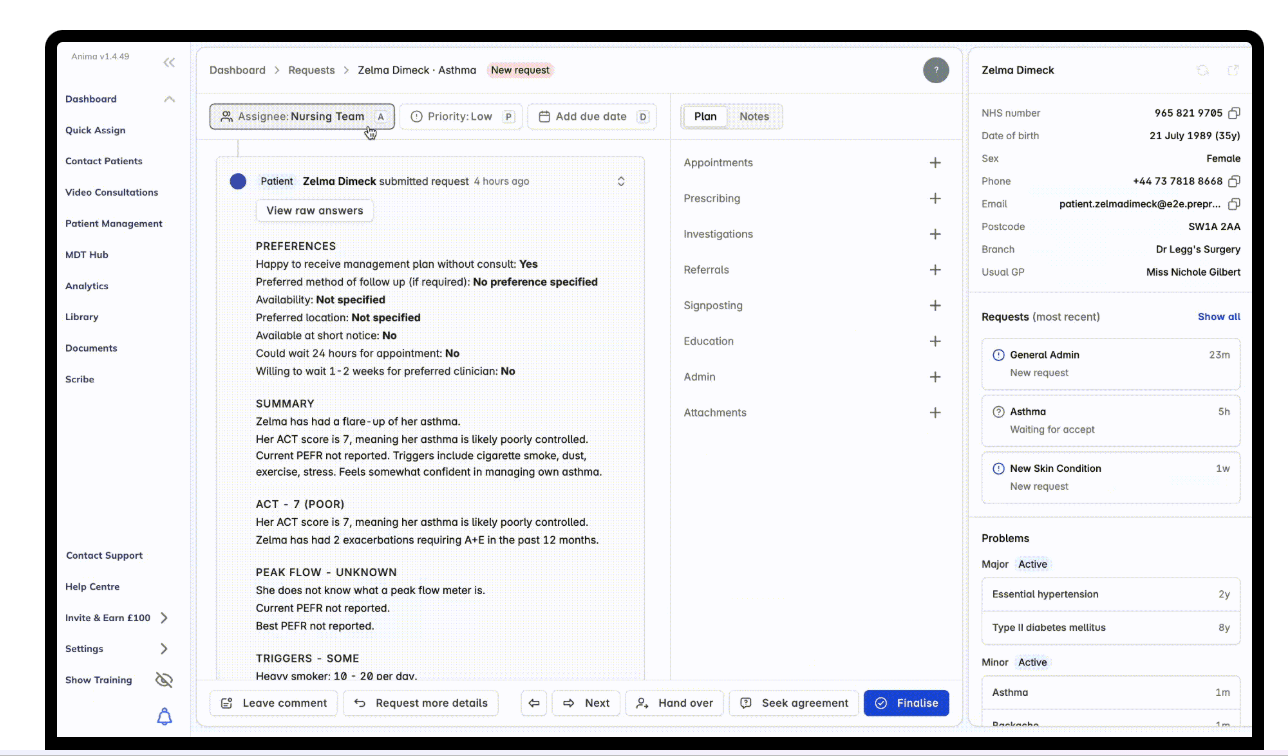
About Anima: Anima is engineered from the ground up to unify fragmented primary care tools. By integrating triage, automated document handling, messaging and workforce analytics into a single interface, it reduces system-switching strain for practice staff.
Key Features:
- Clinical triage & messaging: built-in tools designed to process, code and respond to incoming medical requests in minimal clicks
- Automated document workflows: features engineered to ingest, summarise and process inbound hospital documentation and letters
- EMIS & SystmOne integration: Fast data synching that maintains a clean trail inside core Electronic Patient Records (EPR)
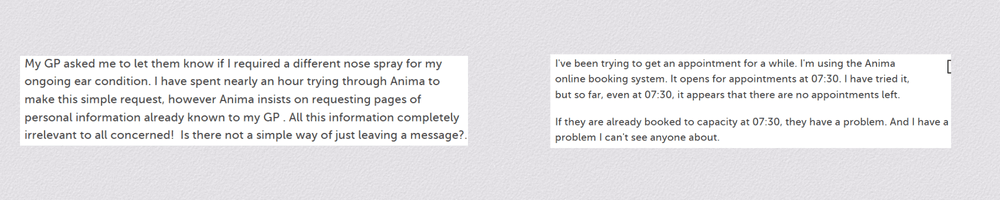
2026 Key Takeaway: Anima provides a high-speed interface that serves as a highly cohesive digital command centre for modern primary care teams.